Introduction
Stepping into the world of digital assets often brings a wave of unfamiliar terms, with storage solutions frequently causing the most confusion. Unlike physical cash that sits safely in a leather billfold, digital currencies do not actually live inside a physical container. Instead, users must navigate specialized software and hardware tools to interact with blockchain networks. Understanding how a crypto wallet functions is the first step toward managing digital currencies with confidence and clarity. For anyone exploring CryptoBlockCoins, mastering this foundational concept ensures a smoother journey through the decentralized ecosystem. This article breaks down the mechanics of digital storage, explores different security practices, and guides beginners through the core concepts without overwhelming technical jargon.
What Is a Crypto Wallet?
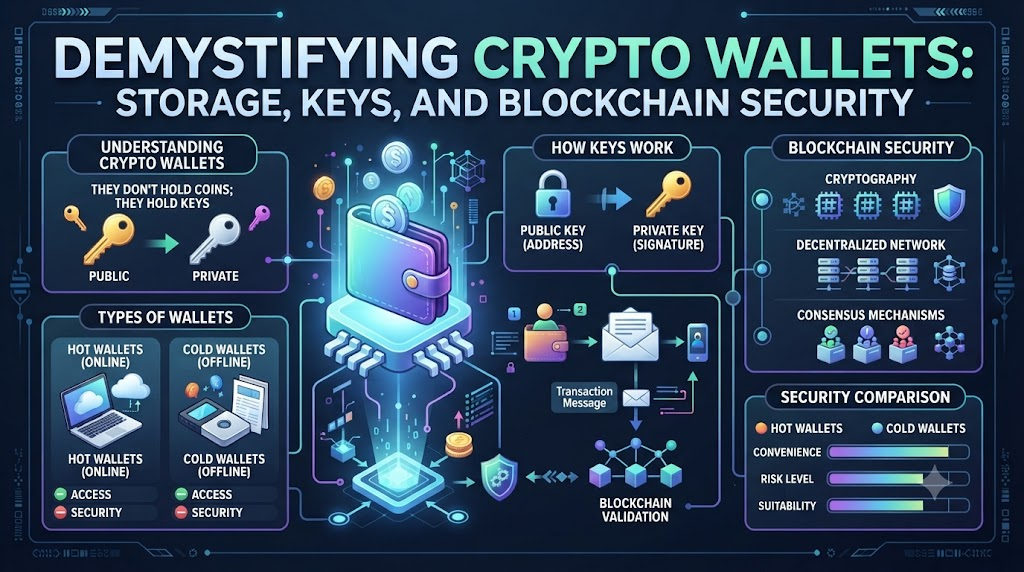
A crypto wallet is a digital tool that allows users to interact with various blockchain networks. Contrary to popular belief, these tools do not store physical coins or tokens. Instead, they store the cryptographic keys necessary to access and manage digital assets residing directly on a blockchain.
The primary purpose of this tool is to sign transactions, prove ownership of digital funds, and securely send or receive value across peer-to-peer networks. Anyone exploring blockchain technology, decentralized finance, or Web3 applications must understand how these tools operate. Important terminology includes public keys, private keys, and seed phrases, each serving a unique role in safeguarding digital wealth.
How Does a Crypto Wallet Work?
Understanding the underlying mechanics of digital storage requires looking at how blockchains process transactions. The system relies heavily on a dual-key cryptographic infrastructure.
- Generation of Keys: When setting up a storage tool, the software generates a unique pair of cryptographic keys—a public key and a private key.
- Receiving Funds: The public key derives a public address, which functions similarly to an email address. Users share this address to receive digital assets from others.
- Signing Transactions: The private key acts like a digital signature or password. It must remain secret because it authorizes the transfer of funds out of the address.
- Blockchain Recording: When a transfer is initiated, the private key signs the transaction, and the network validates the entry across its distributed ledger.
- Network Interaction: The software communicates directly with the decentralized network to display current balances without holding the actual coins locally.
Key Components of a Crypto Wallet
Blockchain Network Integration
Every storage tool links directly to one or more blockchain networks, such as the Ethereum blockchain or the Bitcoin network, allowing users to interact with decentralized ledgers seamlessly.
Public and Private Keys
Public keys allow others to send funds safely, while private keys grant absolute control over those funds. Safeguarding the private key is essential for maintaining asset security.
Seed Phrases
A seed phrase is a sequence of twelve to twenty-four random words generated during setup. It acts as a master backup key capable of recovering all associated accounts and assets if the primary device is lost.
Real-World Examples
To visualize how these tools operate, consider everyday scenarios involving digital currencies. When a beginner decides to purchase digital assets on a cryptocurrency exchange, the exchange initially holds the custody of those funds. Transferring those assets to a personal software tool requires pasting the destination public address and approving the transfer.
Another common scenario involves interacting with decentralized finance applications. Users connect their digital storage tools directly to Web3 platforms to participate in peer-to-peer protocols without relying on traditional intermediaries. Each action requires cryptographic authorization via the user’s private key.
Benefits and Limitations
Benefits
- User Autonomy: Individuals maintain direct control over their digital assets without relying on third-party banking institutions.
- Global Accessibility: Transactions occur across borders instantly without traditional banking hours or international transfer delays.
- Enhanced Privacy: Advanced software tools allow users to manage accounts pseudononymously.
Limitations and Risks
- Absolute Responsibility: Users bear full responsibility for security. Losing access credentials means permanent loss of funds.
- Technical Complexity: Navigating network fees, addresses, and cryptographic keys can intimidate absolute beginners.
- Malicious Threats: Phishing attacks and fraudulent software pose ongoing risks to inexperienced users.
Security and Safety Considerations
Maintaining robust security practices is essential when managing digital assets. Because blockchain transactions are irreversible, prioritizing safety prevents irreversible losses.
- Private-Key Protection: Never share private keys or seed phrases with anyone under any circumstances. Legitimate platforms and support teams will never ask for them.
- Offline Backup: Write down seed phrases on physical paper and store them in secure, fireproof locations rather than digital notes.
- Phishing Awareness: Always double-check website URLs and application links to avoid malicious platforms designed to steal credentials.
- Hardware Solutions: Consider hardware storage devices for large balances, as they keep private keys completely isolated from internet-connected threats.
Common Mistakes Beginners Make
- Ignoring Backup Procedures: Failing to write down or securely store the seed phrase during the initial setup process.
- Storing Credentials Digitally: Saving private keys or seed phrases in cloud storage, emails, or smartphone screenshots.
- Using Unverified Platforms: Downloading unvetted applications from unofficial app stores or clicking suspicious links in search engine ads.
- Neglecting Small Test Transactions: Sending large sums of digital currency without first testing the destination address with a minimal amount.
- Overlooking Network Fees: Forgetting to account for transaction gas fees required to process transfers on busy blockchains.
Crypto Wallet vs Related Concepts
| Feature | Crypto Wallet | Cryptocurrency Exchange |
| Primary Function | Secure storage and key management | Buying, selling, and trading digital assets |
| Custody | Usually self-custodied by the user | Held custodialy by the platform |
| Internet Requirement | Required for online actions; offline for hardware | Always requires internet connectivity |
| Best Suited For | Long-term security and Web3 interaction | Active trading and fiat currency conversion |
Step-by-Step Beginner Guide
- Research Options: Learn the differences between software and hardware storage solutions to find what fits your needs.
- Download or Purchase: Obtain an official application from a trusted developer website or purchase a reputable hardware device directly from the manufacturer.
- Initialize the Setup: Follow the on-screen prompts to generate a new account and create a strong master password.
- Record the Seed Phrase: Carefully write down the generated seed phrase on paper and store it securely offline.
- Verify Backup: Confirm the seed phrase accuracy by completing any verification prompts required by the software.
- Fund and Test: Transfer a small amount of digital currency to your public address to understand how receiving and sending functions operate.
Future Considerations
As blockchain adoption expands globally, digital storage solutions continue to evolve. Developers focus heavily on improving user experience, simplifying account recovery through social guardians, and enhancing cross-chain compatibility.
Furthermore, advancements in cryptographic security aim to protect users against emerging digital threats while making decentralized applications feel as intuitive as traditional internet banking. Regulatory frameworks may also influence how custodial and non-custodial tools operate, emphasizing consumer protection and transparent data management.
Frequently Asked Questions
- What is a crypto wallet?
A crypto wallet is a digital tool that stores cryptographic keys, allowing users to securely send, receive, and manage their digital assets on a blockchain.
- Can a crypto wallet hold different types of cryptocurrencies?
Many modern storage tools support multiple blockchain networks, allowing users to manage various digital assets within a single interface.
- Are crypto wallets safe from hackers?
Security depends largely on user practices; hardware devices offer high protection by staying offline, while software tools require careful password and seed phrase management.
- What happens if I lose my seed phrase?
Losing your seed phrase means losing permanent access to your funds if your primary device breaks or gets lost, as there is no central password reset option.
- Do I need technical skills to use a digital storage tool?
Basic computer literacy is sufficient, as modern applications feature intuitive interfaces designed specifically for everyday users and beginners.
- What is the difference between hot and cold storage?
Hot storage remains connected to the internet for convenient daily use, whereas cold storage keeps private keys completely offline for maximum security.
- Can someone steal my funds if they know my public address?
Knowing a public address only allows someone to send funds to you or view your transaction history, but they cannot withdraw or spend your funds without your private key.
- Are exchanges considered safe alternatives to personal storage?
Exchanges offer convenient trading features, but keeping large balances on third-party platforms exposes users to counterparty risks and potential platform failures.
- How do I choose the right storage tool for my needs?
Consider factors such as asset variety, frequency of use, security requirements, and whether you prefer mobile accessibility or hardware isolation.
- Do these digital tools charge fees for transactions?
While the storage software itself is typically free to use, blockchain networks require transaction fees to process and validate transfers across the decentralized ledger.
Conclusion
Navigating digital asset storage becomes much clearer once you understand the foundational role of cryptographic keys and network interactions. A crypto wallet acts as your personal gateway to blockchain technology, granting you direct ownership and control over your digital funds. CryptoBlockCoins provides educational information only and does not provide financial or investment advice. Cryptocurrency markets can be volatile, so readers should conduct independent research and consider professional advice before making financial decisions. By prioritizing security, maintaining offline backups, and continuing your education, you can approach the digital asset space with confidence and awareness.
